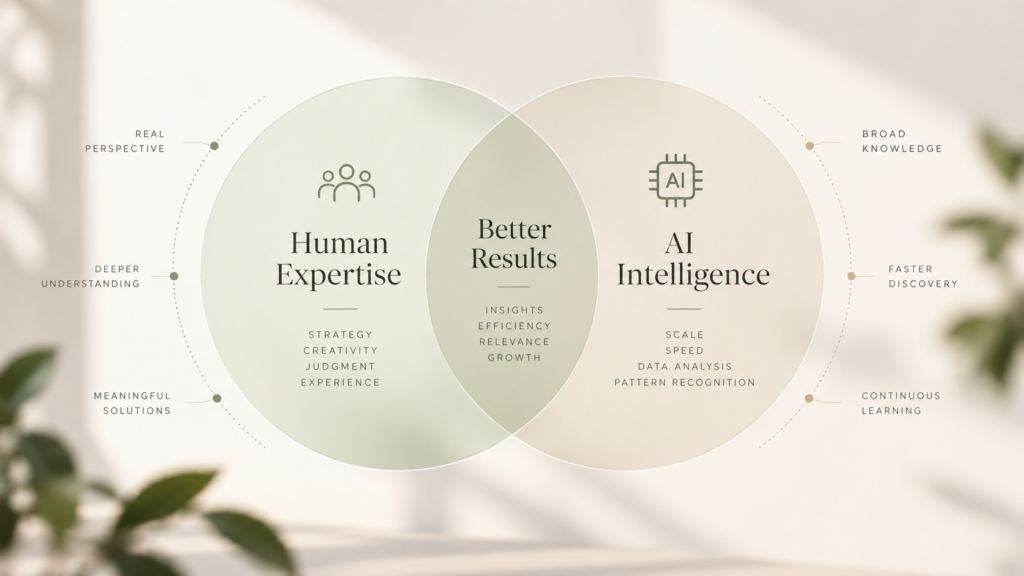

Choosing an AI search optimization agency requires more than finding a provider that mentions ChatGPT, GEO, or generative search on its website.
Many agencies now use “AI SEO” to describe traditional content production or standard technical SEO. Those services may be valuable, but they do not necessarily improve your visibility inside AI-generated answers.
A qualified AI search optimization agency should be able to:
- Track visibility across multiple AI search platforms.
- Improve how search systems access and interpret your website.
- Strengthen your brand’s entity and authority signals.
- Implement technical and content changes directly.
- Connect AI-referred traffic to leads, opportunities, or revenue.
- Prepare your website for AI agents that research and evaluate vendors.
Use the scorecard below to compare providers before signing a contract.
AI Search Optimization Agency Evaluation Scorecard
Score each category from zero to ten. Apply the weighting to calculate a total score out of 100.
| Evaluation criterion | Weight | What a strong agency should demonstrate |
| Platform coverage and methodology | 25% | Monitoring across several platforms with a defined prompt set |
| Technical extractability | 20% | Audits of crawlability, rendering, structure, and content accessibility |
| Entity clarity and structured data | 15% | Consistent brand signals, schema, and entity disambiguation |
| Implementation depth | 20% | Direct execution of technical, content, and structural improvements |
| Attribution and agent-readiness | 20% | AI referral tracking, conversion measurement, and machine-navigation testing |
Use these benchmarks as a starting point:
| Total score | Interpretation |
| 80–100 | Strong initial fit; proceed to references and contract review |
| 60–79 | Potential fit; negotiate to address capability gaps |
| Below 60 | High risk of receiving rebranded traditional SEO |
The score is not a substitute for references or a detailed scope of work. It helps you ask better questions and compare agencies consistently.
1. Assess Platform Coverage and Reporting Methodology
AI search platforms do not produce identical answers. ChatGPT, Perplexity, Gemini, Claude, Google AI Overviews, and other systems may use different data sources and authority signals.
An agency that monitors only one platform is measuring a limited part of your visibility.
Ask to see a sample report. It should identify:
- Which platforms are monitored.
- Which prompts are tested.
- How often testing occurs.
- How the agency defines a mention, recommendation, and citation.
- Whether results are compared month over month.
- How competitors are included in the analysis.
A report containing screenshots of a few AI answers is not a measurement methodology. You need a repeatable process that shows whether your visibility is improving across a consistent set of commercial prompts.
What to ask
“Can you show me an example citation-share report and explain exactly how the data was collected?”
Strong answer
The agency provides a sample report with a defined prompt set, platform list, testing schedule, and trend data.
Weak answer
The agency says it monitors brand mentions but cannot explain the prompts, frequency, or scoring system.
2. Review Technical Extractability
AI systems cannot cite or recommend information they cannot reliably access or interpret.
A technical AI search audit should examine more than page speed and traditional ranking factors. It should consider whether important content is:
- Accessible to relevant search crawlers.
- Rendered correctly without depending on blocked JavaScript.
- Organized with clear headings and page structure.
- Available in crawlable HTML.
- Supported by logical internal links.
- Free from technical barriers that prevent extraction.
Ask the agency whether it distinguishes between training crawlers and search-index crawlers. These serve different purposes, and blocking one does not necessarily prevent a platform from finding or citing your content.
The agency should also explain which technical changes it recommends and why those changes should improve retrieval, interpretation, or citation eligibility.
Warning signs
Be cautious if the agency:
- Treats traditional rankings as proof of AI-search visibility.
- Recommends content before auditing technical access.
- Cannot explain how JavaScript affects content extraction.
- Provides no crawler or rendering analysis.
- Promotes one technical file or markup type as a guaranteed ranking solution.
Technical recommendations should be tied to a specific problem on your website. Avoid generic checklists that do not identify what needs to change.
3. Check Entity Clarity and Structured Data Expertise
AI systems identify organizations, people, products, and services as entities. They need to understand what your company is, what it offers, who it serves, and how it relates to other organizations.
An agency should review whether your brand information is consistent across:
- Your website.
- Organization and service pages.
- Structured data.
- Business directories.
- Industry publications.
- Review platforms.
- Partner and customer websites.
- Author and expert profiles.
The agency should be able to explain how it will improve the clarity of your organization, services, locations, and subject-matter expertise.
Structured data may include Organization, LocalBusiness, Article, Person, Product, or Service schema, depending on the site. Schema alone will not create authority, but inaccurate or incomplete markup can make your business harder to interpret.
What to ask
“How will you determine whether AI systems understand our brand and services correctly?”
Strong answer
The agency proposes an entity audit, identifies inconsistent signals, and explains which structured data and third-party references require improvement.
Weak answer
The agency promises to add generic schema without discussing your business model, services, authors, locations, or external authority signals.
4. Verify Implementation Depth
An audit is not an implementation. A strategy document is not a completed optimization program.
Before signing, establish exactly who will perform each task.
| Deliverable | Agency responsibility | Client responsibility |
| Technical audit | Identify issues and prioritize fixes | Provide access and approve changes |
| Schema implementation | Write, deploy, and validate markup | Review business details |
| Content production | Research, write, and optimize pages | Provide subject-matter input |
| Internal linking | Build and document the linking structure | Approve navigation changes |
| Citation monitoring | Set up prompts and reporting | Review results and priorities |
| Conversion improvements | Test inquiry paths and forms | Approve design or development work |
A vague statement such as “we work closely with your team” may mean your team is expected to complete the work.
Ask for named deliverables, responsible people, timelines, and approval requirements. Also confirm what happens when the engagement ends.
You should retain access to:
- Content assets.
- Schema and structured data.
- The prompt set used for monitoring.
- Historical reports.
- Analytics and attribution data.
- Technical recommendations.
- Any tools or dashboards created for the engagement.
Data portability matters because AI-search methodologies and platforms are changing quickly. You should not have to restart the program after changing providers.
5. Connect AI Visibility to Business Results
Citations and mentions are useful leading indicators, but they are not the final business outcome.
A mature agency should help answer questions such as:
- Which AI platforms refer visitors to the website?
- Which prompts or topics generate those visits?
- Do AI-referred visitors engage with important pages?
- Which visits become inquiries or leads?
- Which leads enter the CRM?
- What revenue can be associated with the program?
This may require analytics configuration, UTM parameters, referral tracking, form data, and CRM integration.
Not every AI referral will be perfectly attributable. AI platforms may remove or alter referral information. A credible agency should explain those limitations rather than promise complete visibility into every interaction.
What to ask
“How will you connect AI-search visibility to qualified leads or pipeline?”
Strong answer
The agency describes a measurement plan that combines citation monitoring, referral traffic, conversions, CRM data, and agreed reporting limitations.
Weak answer
The agency presents citation screenshots as proof of revenue impact.
6. Ask About Agent-Readiness
AI-generated answers are only one part of the changing search experience. AI agents may also research providers, compare services, navigate websites, and initiate actions for human buyers.
This creates a separate question:
Can an AI system accurately evaluate your company and complete the next step on your website?
An agent-readiness review may assess whether:
- Important service information is easy to find.
- Pricing or qualification details are clearly presented.
- Forms and contact paths work without unnecessary friction.
- Calls to action are understandable to both people and machines.
- Key pages depend on inaccessible scripts.
- Locations, service areas, and eligibility requirements are explicit.
- The site provides a clear path from research to inquiry.
Not every agency needs to offer a full agentic-search program. However, a provider claiming advanced AI-search expertise should understand the difference between being cited and being selected or acted upon by an AI agent.
Questions to Ask on the Sales Call
Use these questions to distinguish a specialist from an agency applying a new label to old SEO work.
“Which AI-search tactics have you tested and abandoned?”
A strong answer includes a specific test, expected mechanism, result, and lesson learned. A weak answer consists of general statements about innovation or staying current.
“How do you measure citation share?”
Look for a defined prompt set, platform list, testing schedule, competitor comparison, and explanation of how mentions differ from recommendations or linked citations.
“What will your team implement directly?”
The agency should identify who handles technical fixes, schema, content, internal linking, analytics, and conversion improvements.
“What do we own after the engagement?”
The answer should cover content, structured data, reporting, prompt sets, analytics configurations, and access to historical data.
What Does AI Search Optimization Cost?
Published pricing varies by agency and scope. Typical ranges are:
| Program type | Typical investment | Expected scope |
| One-time audit | $2,000–$5,000 | Technical, entity, and visibility baseline |
| SMB retainer | $2,500–$6,000 per month | Monitoring, content, schema, and technical fixes |
| Mid-market program | $5,000–$15,000 per month | Full implementation, attribution, and reporting |
| Enterprise program | $15,000–$50,000 per month | Multi-site architecture, content scale, and custom monitoring |
These ranges are based on published agency pricing and 2026 market comparisons.¹
At lower monthly retainers, confirm the number of platforms monitored, the number of prompts tested, the reporting frequency, and whether tool licenses are included.
A low-cost audit can be appropriate if it produces prioritized recommendations and a realistic implementation plan. It is less valuable if your team lacks the resources to execute the work.
Red Flags When Choosing an Agency
Avoid providers that:
- Describe AI-assisted writing as a complete AI-search strategy.
- Report only rankings, traffic, or content volume.
- Promise guaranteed placement in ChatGPT or other AI platforms.
- Show citation screenshots without a repeatable methodology.
- Recommend content before reviewing technical accessibility.
- Offer recommendations without implementation support.
- Cannot explain how results connect to leads or revenue.
- Require a long contract without a review or exit clause.
- Restrict your access to data and assets after the engagement ends.
- Treat rapidly changing tactics as guaranteed solutions.
Also review the agency’s own website. If it claims to specialize in AI search but provides no clear methodology, technical explanation, measurement framework, or evidence of implementation, ask why.
Agency Fit by Buyer Type
You do not need the largest or most visible agency. You need one with the right operating model for your website and buying process.
Enterprise organizations may need technical specialists such as Onely, iPullRank, or Seer Interactive. B2B SaaS companies may prefer agencies such as Optimist or Siege Media, depending on whether pipeline attribution or content production is the priority.
Smaller businesses and local-service companies may need a more integrated program that combines traditional SEO, local search, content, and AI visibility. Providers such as Driven Metrics or Thrive may be more relevant for that buyer type.
These examples are not rankings. Before selecting any provider, verify its current services, team structure, pricing, case studies, and reporting process.
Frequently Asked Questions
What is an AI search optimization agency?
An AI search optimization agency helps businesses improve their visibility and accuracy within AI-generated search experiences. Services may include technical audits, content optimization, structured data, entity work, citation monitoring, and AI-referred lead tracking.
How is AI search optimization different from traditional SEO?
Traditional SEO focuses mainly on rankings and traffic from search engines. AI search optimization also considers whether AI systems can access, interpret, cite, and recommend a company’s information.
The disciplines overlap, but AI-search programs add platform-specific monitoring and a stronger focus on entity clarity, retrieval, citations, and machine-readable conversion paths.
How long does it take to see results?
Initial visibility data may be available within several months. Meaningful changes in citation share, qualified traffic, and pipeline usually take longer.
Results depend on technical condition, existing authority, content quality, category competition, and the speed of implementation. Ask the agency to establish a baseline before making performance claims.
Do small businesses need an AI search optimization agency?
A small business may benefit if its customers use AI platforms to compare providers or find local services. The program should be proportional to the opportunity.
For many smaller companies, the priorities are accurate business information, clear service pages, local authority signals, structured data, and a frictionless path to contact the business.
Conclusion
The right AI search optimization agency should be able to explain its methodology, implement the work, measure meaningful outcomes, and adapt as AI search changes.
Use the scorecard in this guide to compare providers across platform coverage, technical expertise, entity clarity, implementation, attribution, and agent-readiness. Then ask what each agency has tested, what it has stopped doing, and what you will own when the engagement ends.
Contact Driven Metrics to discuss your AI search optimization program
Last updated: September 22, 2026
Sources
- Published agency pricing information and market comparisons from Optimist, Siege Media, Onely, Thrive Agency, and related 2026 pricing references.
- Optimist, “The 7 Best AI SEO Agencies Helping Clients Win AI Search in 2026,” yesoptimist.com/answer-engine-optimization/.
- SparkToro and Similarweb, “Zero-Click Search Study,” sparktoro.com/blog/in-2026-less-than-one-third-of-google-searches-still-send-a-click/.
- G2, “2026 Answer Economy Report,” learn.g2.com/g2-2026-ai-search-insight-report.